Does Exercise Improve Memory and Focus? What Research Shows
| Short answer | Yes — regular movement is one of the best-evidenced ways to support memory, attention and processing speed. |
| Why it works | Exercise boosts blood flow, releases brain growth factors, lifts mood and improves sleep — all fuel for clear thinking. |
| Fastest fix | A single 10–20 minute brisk walk sharpens focus for a couple of hours afterward. |
| Longer game | Aim for ~150 minutes a week, and stack it with B-vitamins and botanicals taken consistently. |

We tend to think of exercise as a body project — something for the heart, the waistline or the muscles. But some of its most striking benefits happen above the neck. If you have asked does exercise improve memory and focus, the research gives a confident yes: movement is one of the most reliable, best-studied ways to sharpen attention, speed up thinking and strengthen memory, both in the moments after a workout and over months of consistency.
This guide walks through what research shows about exercise and the brain — how movement changes the way you think, which types and timing help most, and the simple daily habits that make the benefits stick. It is general information rather than medical advice, but it gives you a clear, practical map.
Does exercise improve memory and focus? The evidence
Study after study points the same way. People who are physically active tend to score better on tests of attention, working memory and processing speed than people who are sedentary, and structured exercise programmes have been shown to improve those same measures over time. The effect appears across the lifespan — in children and students, in busy adults, and especially in older people, where regular activity is associated with better-preserved memory and thinking as the years go by.
Just as striking is how fast the acute effect kicks in. A single bout of moderate exercise — a brisk 20-minute walk, a short bike ride — produces a measurable lift in attention and mental clarity that can last a couple of hours. That is why a mid-morning walk so often unsticks a stalled task: you are not just clearing your head figuratively, you are genuinely priming the brain for sharper work.
Why movement sharpens the brain
Several mechanisms work together to explain the effect:
- More blood flow: raising your heart rate delivers more oxygen and glucose to the brain, its two essential fuels.
- Growth factors: exercise supports the release of BDNF (brain-derived neurotrophic factor), a protein involved in forming and maintaining connections between brain cells — central to learning and memory.
- Better mood chemistry: movement releases endorphins and helps regulate stress hormones, lifting the low, foggy mood that drags focus down.
- Deeper sleep: active people tend to sleep better, and sleep is when the brain consolidates memories.
Because several of these overlap with the drivers of everyday brain fog, exercise often solves more than one problem at once. If cloudy thinking is a frequent visitor, our guide on what causes brain fog and how to get rid of it naturally shows how movement slots in alongside sleep, hydration and nutrition.
The best type of exercise for memory and focus
The single most important factor is simply doing it regularly — but if you want to lean into the cognitive benefits, some forms have a slight edge.
Aerobic exercise: the strongest evidence
Activities that raise your heart rate and keep it up — brisk walking, jogging, cycling, swimming, dancing — have the most research behind them for memory and focus. This makes sense given how much of the benefit flows from improved blood flow and growth-factor release. You do not need to run marathons: moderate intensity, where you can talk but not sing, is the sweet spot for most people.
Strength training adds its own benefits
Resistance work — weights, resistance bands, bodyweight exercises — brings cognitive benefits too, particularly for executive function, the mental toolkit behind planning and focus. Combining aerobic and strength work through the week gives you the fullest picture of brain support, and strength training also protects the muscle and metabolic health that keep energy steady.
Coordination and play
Activities that pair movement with mental challenge — dance, racket sports, team games, martial arts — ask the brain to plan, react and adapt in real time. That extra cognitive demand appears to add to the benefit, and, just as importantly, these activities are fun, which makes them easier to keep up. The best exercise for your brain is, in the end, the one you will actually do.
Fuel an active mind and body
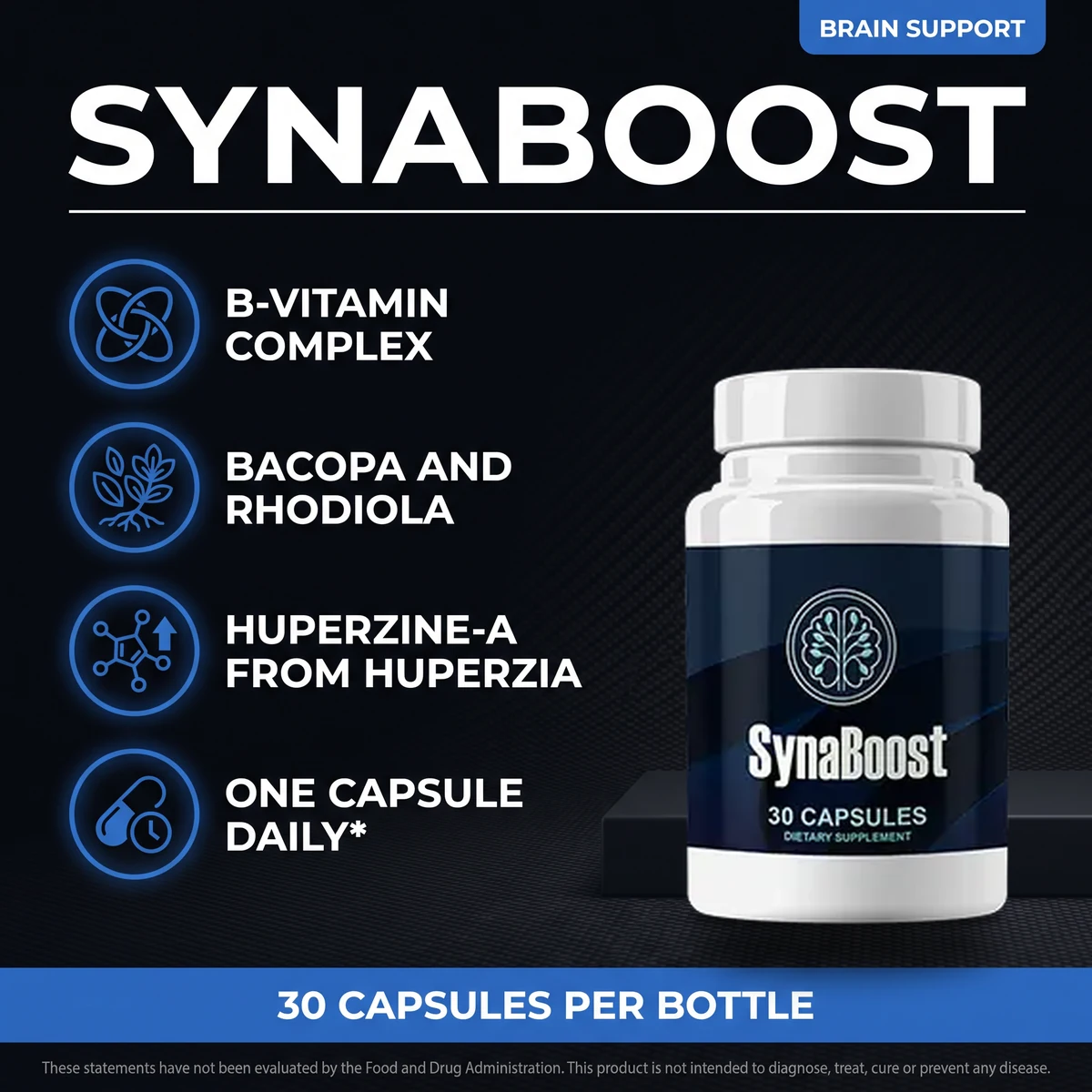
SynaBoost™ combines a high-potency B-vitamin complex with L-Tyrosine and botanical brain actives in one simple daily capsule — designed to support clear, steady thinking alongside an active routine. Try it risk-free with a 60-day money-back guarantee.
See SynaBoost Packages
How much, and when, for a sharper mind
General public-health guidance suggests around 150 minutes of moderate activity a week, plus a couple of muscle-strengthening sessions. That is a good target, but for the mental benefits you do not have to hit it in one go — the brain responds to whatever movement you can fit in.
Fast wins (today)
- Walk before you work: a 10–20 minute brisk walk before a demanding task primes your focus.
- Break up sitting: stand and move for a few minutes every hour — long, unbroken sitting dulls the mind.
- Take the fog outside: movement plus daylight is a powerful combination for alertness.
- Two-minute reset: a quick set of squats or a stair climb re-energises a stalled afternoon.
Steady habits (this month)
The lasting memory and attention gains come from consistency, so the priority is a routine you can sustain. Attach movement to something you already do — a walk after lunch, a cycle to the shops, a short strength session before your shower. Timing helps too: a morning or midday bout gives an immediate focus lift and supports better sleep, while very intense exercise right before bed can disrupt sleep for some people, so leave a couple of hours' buffer. For a broader routine that stacks movement with sleep and other habits, see our guide on how to improve focus and memory naturally, and if stress keeps derailing your plans, how stress affects your memory and focus explains why exercise is one of the best antidotes.
Where nutrients and botanicals fit in
Movement is the active ingredient, but it draws on the same fuel system that clear thinking depends on. The B-vitamins — especially B1 (thiamine), B6 and B12 — support normal energy metabolism in both muscle and brain. Alongside them, botanicals with a long history of traditional use include Rhodiola rosea, an adaptogen valued for supporting stamina and coping with fatigue; Bacopa monnieri, studied for supporting memory with consistent use; and Huperzia serrata, a natural source of Huperzine-A traditionally used to support clarity. These complement an active routine rather than replacing it. Instead of stacking separate powders, many people prefer a single daily formula — the idea behind SynaBoost, which brings a B-vitamin complex together with these botanicals in one capsule.
One simple capsule, ten brain actives
Pair a moving body with steady daily support. SynaBoost™ packs a B-vitamin complex and botanical brain actives into a single once-daily capsule to support clear, steady thinking — backed by a 60-day money-back guarantee.
Order SynaBoost Today
A sensible note before you start
Exercise is remarkably safe for most people, and the benefits far outweigh the risks. Still, if you are new to activity, returning after a long break, pregnant, over a certain age, or living with a heart, joint or other health condition, it is wise to check with a healthcare professional before beginning a vigorous programme. Start gently, build gradually, and stop if you feel chest pain, severe breathlessness or dizziness. Building up sustainably beats going too hard and giving up.
The bottom line
Does exercise improve memory and focus? Firmly yes — it is one of the most powerful, best-evidenced and most accessible tools for a sharper mind. A short walk gives you a same-day boost; a regular habit builds lasting gains in memory and attention. Choose activity you enjoy, keep it consistent, time it to support your sleep, and back it up with well-chosen B-vitamins and botanicals if you want a daily edge. Your brain rewards a body that moves.
FAQ
Does exercise really improve memory and focus?
Yes. Research consistently links regular physical activity with better attention, faster processing and stronger memory. Movement increases blood flow to the brain, supports the release of growth factors involved in forming new connections, and improves sleep and mood — all of which feed clearer thinking. Even a single brisk walk can sharpen focus for a couple of hours afterward.
How much exercise do I need to sharpen my mind?
General guidance suggests about 150 minutes of moderate activity a week, such as brisk walking, plus a couple of muscle-strengthening sessions. For mental benefits you do not need to hit that all at once — even 10 to 20 minutes of movement produces a short-term lift in focus. Consistency over weeks is what builds the lasting memory and attention gains.
What type of exercise is best for the brain?
Aerobic activity — walking, cycling, swimming, jogging — has the strongest evidence for memory and focus, because it raises heart rate and blood flow. Strength training adds its own cognitive benefits, and coordination-based activities like dancing or team sport combine movement with mental challenge. The best type, ultimately, is the one you will do regularly.
When is the best time to exercise for focus?
A short bout of movement gives an immediate focus boost, so exercising before demanding mental work can help you concentrate. Morning activity also supports sleep and sets a steady rhythm for the day. Intense exercise very close to bedtime can disrupt sleep for some people, so leaving a couple of hours before bed is a sensible default.
Can supplements support the brain benefits of exercise?
Movement is the active ingredient, but B-vitamins support the normal energy metabolism that fuels both muscles and mind, and botanicals such as Rhodiola rosea are traditionally used to support stamina and coping with fatigue. These complement an active routine rather than replacing it, and build up gradually with consistent daily use alongside sleep and good nutrition.
References
- U.S. Department of Health and Human Services — Physical Activity Guidelines for Americans. health.gov
- Harvard Health Publishing — Exercise and the brain. health.harvard.edu
- Centers for Disease Control and Prevention — Physical activity basics. cdc.gov
- Examine.com — independent research summary on Rhodiola rosea and fatigue. examine.com/supplements/rhodiola-rosea
- PubMed (U.S. National Library of Medicine) — research literature on exercise, BDNF and cognition. pubmed.ncbi.nlm.nih.gov
† These statements have not been evaluated by the Food and Drug Administration. This product is not intended to diagnose, treat, cure or prevent any disease. This article is for general information only and is not medical advice. If you are pregnant, nursing, taking medication or have a health condition, consult your physician before starting any supplement or exercise programme.