How Gut Health Affects Your Brain, Mood and Focus
| Short answer | Your gut and brain are in constant two-way conversation — a well-fed gut-brain axis supports steadier mood and clearer focus. |
| Why it happens | Gut bacteria influence mood-related chemicals, make B-vitamins the brain needs, and shape inflammation that affects thinking. |
| Fastest fix | Add fibre-rich plants and a fermented food today; cut back on ultra-processed snacks. |
| Longer game | Eat a wide variety of plants, plus steady B-vitamins and botanicals taken consistently. |

We are used to thinking of the brain as the body's command centre, issuing orders downward. But one of the most fascinating shifts in recent nutrition science is the realisation that the traffic runs both ways — and that your digestive system has a surprising say in how you think and feel. If you have wondered how gut health affects your brain, the short answer is: profoundly, and through channels most of us were never taught about. That gut feeling before a big decision is not just a figure of speech.
This guide explains the gut-brain connection in plain language — how an unhappy gut can cloud mood and focus, why the food you eat feeds more than your body, and the everyday habits that support both. It is general information rather than medical advice, but it gives you a clear place to start.
How gut health affects your brain: the gut-brain axis
Your gut is home to trillions of microorganisms — collectively, the gut microbiome — that do far more than help you digest food. They are in constant communication with your brain through a network scientists call the gut-brain axis. This is not a vague, metaphorical link; it runs along concrete pathways: the vagus nerve, which carries signals directly between gut and brain; the immune system, which the gut heavily influences; and a stream of chemical messengers produced or shaped by gut bacteria.
Because that conversation is continuous and two-way, the state of your gut can register as changes in mood, energy and mental clarity. A gut microbiome that is diverse and well-fed tends to support steadier mood and clearer thinking, while an imbalanced one — starved of fibre, dominated by the wrong mix — is increasingly linked with low mood, fatigue and cloudy focus. It is one strand among several, alongside sleep, hydration, blood sugar and stress, but it is a strand we are only now learning to appreciate.
Three ways the gut talks to the brain
- The nervous route: the vagus nerve is a direct line, carrying signals between the gut and the brain in both directions.
- The chemical route: gut bacteria help produce and regulate the raw materials behind mood-related messengers such as serotonin.
- The immune route: the gut shapes inflammation throughout the body, and chronic low-grade inflammation is associated with fog and low mood.
Why an unhappy gut clouds mood and focus
Two mechanisms stand out. First is the chemistry. A large share of the body's serotonin activity — a messenger central to mood — is linked to the gut, and gut bacteria influence the availability of the building blocks and signals behind several mood-related compounds. When the microbiome is out of balance, that production becomes less stable, which can show up as a flatter, foggier state of mind. This is a major reason digestive troubles and low mood so often travel together.
Second is inflammation. A diet low in fibre and high in ultra-processed food can encourage a less favourable bacterial mix and a more permeable gut lining, nudging the immune system toward low-grade, body-wide inflammation. That inflammatory signalling reaches the brain and is associated with the heavy, sluggish thinking many people call brain fog. If fog is a frequent visitor for you, our guide on what causes brain fog and how to get rid of it naturally shows how gut health slots in beside sleep, hydration and stress.
The B-vitamin connection
There is a third, more practical link that is easy to overlook: your gut bacteria actually manufacture several of the B-vitamins your nervous system depends on. A healthy, diverse microbiome contributes to your supply of these clarity-supporting nutrients, while a depleted one may contribute less. It is a neat illustration of how feeding your gut well is, quite literally, feeding your brain.

The everyday habits that shape your gut — and your mind
The reassuring news is that the microbiome is responsive. It shifts with what you eat and how you live, sometimes within days, which means small, consistent changes genuinely add up.
What tends to help
Fibre is the single most important lever, because it is the food your beneficial bacteria thrive on. A wide variety of plants — vegetables, fruit, whole grains, beans, lentils, nuts and seeds — grows a more diverse, resilient microbiome, and diversity is one of the clearest markers of a healthy gut. Fermented foods such as yoghurt, kefir, sauerkraut, kimchi and miso add live cultures, while oily fish supplies omega-3 fats that support both gut lining and brain. For a full plate-by-plate walkthrough, see our best foods for brain health and memory guide.
What tends to hurt
On the other side, a steady diet of ultra-processed food, excess sugar and very little fibre tends to narrow microbiome diversity over time. Chronic stress and poor sleep also disrupt the gut, another reminder that these systems are interconnected — and it works both ways, since an unsettled gut can feed back into stress and low mood. If persistent tiredness is part of your picture, our guide on why you feel mentally tired all the time looks at how these pieces fit together.
Feed your brain from the ground up
A well-fed gut helps supply the B-vitamins your mind runs on — SynaBoost™ tops them up with a high-potency B-vitamin complex and botanical brain actives in one simple daily capsule to support clear, steady thinking. Try it risk-free with a 60-day money-back guarantee.
See SynaBoost Packages
Practical steps for a happier gut and clearer mind
You do not need an elaborate protocol or expensive tests. A handful of habits move the needle for most people.
Fast wins (today)
- Add a plant: put one extra vegetable, pulse or handful of nuts on your plate.
- Try a fermented food: a spoonful of yoghurt, kefir or sauerkraut brings in live cultures.
- Swap a snack: trade an ultra-processed snack for fruit, nuts or wholegrain toast.
- Hydrate: fibre works best with enough water — the two go hand in hand.
Steady habits (this month)
The gold-standard habit is variety: aim to eat a wide range of different plants across a week rather than the same few on repeat, because diversity on the plate builds diversity in the gut. Keep fibre steady, include fermented foods regularly, protect your sleep, and manage stress — all of which the microbiome quietly rewards. For a broader routine that ties nutrition together with the other pillars of a sharp mind, see our guide on how to improve focus and memory naturally.
Where nutrients and botanicals fit in
A varied, fibre-rich diet is the foundation, but topping up the nutrients your gut and brain both rely on can help. The B-vitamins — especially B1 (thiamine), B6 and B12 — support normal energy metabolism and nervous-system function, complementing what a healthy gut produces. Alongside them, botanicals with a long history of traditional use include Bacopa monnieri, studied for supporting memory with consistent use; Rhodiola rosea, an adaptogen valued for supporting stress resilience and stamina; and Huperzia serrata, a natural source of Huperzine-A traditionally used to support clarity. These complement good eating rather than replacing it. Instead of stacking separate powders, many people prefer a single daily formula — the idea behind SynaBoost, which brings a B-vitamin complex together with these botanicals in one capsule.
One simple capsule, ten brain actives
Support the gut-brain team from both ends. SynaBoost™ packs a B-vitamin complex and botanical brain actives into a single once-daily capsule to support clear, steady thinking — backed by a 60-day money-back guarantee.
Order SynaBoost Today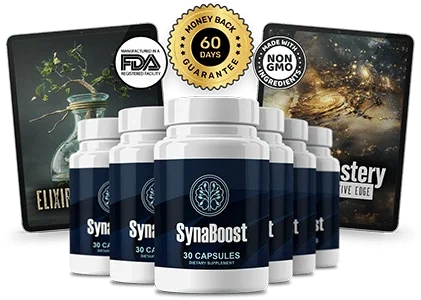
When to see a doctor
Everyday changes in mood and focus that track with diet usually respond well to the habits above. But persistent digestive symptoms deserve proper attention. Speak to a healthcare professional if you have ongoing bloating, pain, changes in bowel habits, unexplained weight loss, or blood in your stool — and if low mood or fog is severe, worsening or not lifting after you address diet, sleep and stress. A doctor can rule out conditions such as coeliac disease, irritable bowel syndrome or a nutrient deficiency. Getting persistent symptoms checked is sensible, not dramatic.
The bottom line
How gut health affects your brain is one of the most exciting frontiers in everyday wellness: through the gut-brain axis, your microbiome helps shape mood, focus and even your supply of clarity-supporting B-vitamins. The path to a happier gut is refreshingly simple — eat a wide variety of fibre-rich plants, add fermented foods, go easy on ultra-processed fare, and protect your sleep and stress levels. Support the whole system with well-chosen B-vitamins and botanicals if you want a daily edge, and you feed your mind from the ground up.
FAQ
How does gut health affect the brain?
The gut and brain are in constant two-way communication through the vagus nerve, immune signalling and chemical messengers, a system often called the gut-brain axis. Gut bacteria help produce and regulate compounds that influence mood and focus, and they make many B-vitamins the brain relies on. A well-fed, diverse gut microbiome supports steadier mood and clearer thinking.
Can poor gut health cause brain fog?
It can contribute. An imbalanced gut and a diet low in fibre can promote low-grade inflammation and less stable production of mood-related chemicals, both of which are associated with cloudy thinking and low energy. Gut health is one strand among several — sleep, hydration, blood sugar and stress all matter too — but it is an increasingly recognised piece of the puzzle.
What foods improve the gut-brain connection?
Fibre-rich plants feed beneficial bacteria — vegetables, fruit, whole grains, beans, nuts and seeds. Fermented foods such as yoghurt, kefir, sauerkraut, kimchi and miso add live cultures. Oily fish provides omega-3s that support both gut and brain. Variety matters most: a wide range of plants tends to grow a more diverse, resilient microbiome.
Does the gut really make brain chemicals?
The gut is deeply involved in the body's chemical messaging. A large share of the body's serotonin activity is linked to the gut, and gut bacteria influence the raw materials and signalling behind several mood-related compounds. They also synthesise B-vitamins that the nervous system depends on. This is a major reason an unhappy gut so often shows up as a low, foggy mood.
Do probiotics or supplements help mood and focus?
A varied, fibre-rich diet is the foundation of gut health. Fermented foods and, for some people, probiotics may help, though responses vary. B-vitamins support the nervous system and normal energy metabolism, and botanicals such as Bacopa monnieri and Rhodiola rosea are traditionally used to support clarity and stress resilience. These complement good eating rather than replacing it.
References
- Harvard Health Publishing — The gut-brain connection. health.harvard.edu
- Harvard T.H. Chan School of Public Health — The Nutrition Source: Fiber and the microbiome. nutritionsource.hsph.harvard.edu
- National Institutes of Health, Office of Dietary Supplements — B Vitamins consumer fact sheets. ods.od.nih.gov
- Examine.com — independent research summary on Bacopa monnieri and memory. examine.com/supplements/bacopa-monnieri
- PubMed (U.S. National Library of Medicine) — research literature on the gut-brain axis and microbiome. pubmed.ncbi.nlm.nih.gov
† These statements have not been evaluated by the Food and Drug Administration. This product is not intended to diagnose, treat, cure or prevent any disease. This article is for general information only and is not medical advice. If you are pregnant, nursing, taking medication or have a health condition, consult your physician before starting any supplement.